


USB C Cable for Audio: The Complete 2025–2030 Market, Engineering, and OEM Guide
Published: March 31, 2026
Last Updated: March 31, 2026
Author: Lynn Zhang, CEO at Jingyi Audio
Reviewer: Internal technical review by the Jingyi Audio engineering and product team
Quick answer
A USB C cable for audio is no longer just a cable. In many products, it is part of the audio system itself. It can carry digital audio, power, microphone data, control signals, and in some designs it also contains a DAC or ADC inside the connector or inline module. That is why this category now matters in Hi-Fi listening, mobile recording, conferencing, and OEM product development.
TL;DR
-
USB-C is now the default wired connector for a large part of the consumer electronics and audio market, helped by EU common charger rules. (commission.europa.eu)
-
The USB-C cable market is growing fast, and the wider USB-C connector market is growing even faster, which makes audio cables a serious product category rather than a simple accessory segment.
-
For pure audio, USB 2.0 is often enough. In some high-end audio designs, it is even the better choice because it reduces internal complexity and noise risk.
-
Premium USB-C audio products now win on DAC and ADC integration, shielding, materials, connector strength, power isolation, and host-device compatibility.
-
Many real user complaints come from connector movement, EMI leakage, OS behavior, power limits, and poor extension methods rather than raw bandwidth limits.
-
Google says AI search features still depend on solid SEO basics, clear text, crawlable pages, and helpful content, so this article is written in a direct, extraction-friendly format. (developers.google.com)
Why this article is structured this way
This version was revised for two goals at the same time: better human readability and better machine retrieval.
Google’s current guidance says pages do not need a special AI-only format to appear in AI search features. They need to be indexable, snippet-eligible, technically accessible, and built around helpful, reliable content. Google also recommends keeping important information in visible text and using structured, clear page content that matches what users actually need. (developers.google.com) (developers.google.com)
That is why this article uses:
-
short direct answers
-
question-based headings
-
entity-rich wording
-
plain explanations
-
extraction-friendly FAQ answers
-
visible author and update details
-
clear product and engineering examples
Now let’s get into the actual topic.
What is a USB C cable for audio?
Short answer: A USB C cable for audio is a USB Type-C cable, adapter, or active interconnect used to send audio between devices. Depending on the design, it may carry digital audio only, digital audio plus power, microphone data, control signals, or converted analog output through an integrated DAC.
A lot of people hear the phrase and picture a simple wire. That is no longer accurate in a big part of the market.
How USB-C audio is different from 3.5mm audio
With a 3.5mm headphone jack, the host device usually handled the digital-to-analog conversion and amplification. The cable mostly carried an analog signal.
With USB-C audio, that processing can move outside the host device. The conversion stage may sit in:
-
a USB-C to 3.5mm dongle
-
the cable housing
-
an inline control module
-
the headphone
-
an external DAC or interface
So the cable is not just moving signal anymore. In many cases, it is part of the signal chain itself.
The four main product types
1. Passive USB-C audio cable
This type mainly transports digital audio between devices and does not rely on advanced onboard audio conversion.
2. USB-C to 3.5mm adapter
This is the common path for users who still want to use analog headphones with USB-C phones or tablets. In many designs, the adapter contains a DAC.
3. Active USB-C DAC cable
Here the DAC is built into the connector shell or inline module. That turns the cable into an active electronic audio product.
4. USB-C audio/video cable for ProAV
In conference rooms, classrooms, and enterprise systems, USB-C may carry audio, video, power, and control together. These products sit in a different reliability class than a consumer dongle.
Why the global USB-C audio market is growing so fast
Short answer: The market is growing because regulation is pushing USB-C standardization, device makers keep removing analog audio ports, and users now expect wired digital audio across phones, laptops, speakerphones, headphones, and pro gear.
This is not just a passing consumer trend. It is a hardware and policy shift happening at the same time.
Market size and growth outlook for 2025–2030
The report gives three useful market frames:
| Market Segment / Metric | 2025 Base | 2026 Projection | Long-Term Projection | CAGR |
|---|---|---|---|---|
| USB-C Cable Market (Conservative) | $3.46B | $3.81B | $6.57B by 2032 | 9.57% |
| USB-C Cable Market (Aggressive) | $4.09B | $4.81B | $9.00B by 2030 | 17.0%–17.7% |
| Broad USB-C Connector Hardware Market | N/A | $7.40B | $49.29B by 2035 | 24.8% |
These numbers matter because they show that cable demand is already large, while the broader connector ecosystem is expanding even faster. That puts USB-C audio in the middle of a much bigger hardware shift.
EU regulation is pushing the whole market
The European Commission says USB-C common charging is mandatory for a broad set of new devices sold in the EU from December 28, 2024, and for laptops from April 28, 2026. The stated goals are easier charging for consumers and less e-waste. (commission.europa.eu)
For OEMs and ODMs, this changes product planning in a real way:
-
proprietary connector strategies lose ground
-
USB-C becomes the safe long-term connector path
-
compliance affects market access
-
accessory and audio-product design has to follow the same standard direction
The USB-IF also provides an EU conformity program tied to the referenced USB specifications, which makes testing and documentation more important through the supply chain. (usb.org)
Why USB-C is no longer optional
If a company wants to sell into major regulated markets, USB-C is no longer just a feature to add later. It is part of the product base.
This matters for audio because:
-
Lightning-era accessory thinking is fading
-
consumer expectations are becoming more uniform
-
enterprise and education buyers want fewer cable types
-
global markets often follow EU hardware direction after a short lag
That is why USB-C audio is now a core product topic, not a side topic.
How the audio industry moved from passive cables to active digital interconnects
Short answer: When the 3.5mm jack disappeared from many phones, tablets, and laptops, audio processing moved outward. That shift created a new product class where the cable or dongle now handles digital-to-analog or analog-to-digital work.
This changed the whole category.
The 3.5mm jack removal changed the audio chain
Years ago, the host device usually contained the DAC and headphone amp. The cable just carried analog output.
Now the chain often looks different:
-
the host sends digital audio out over USB-C
-
conversion may happen in the adapter or cable
-
microphone handling may also happen there
-
ANC-related control can be handled in the USB-C path
-
the “cable” becomes a compact electronics assembly
That is why a premium USB C cable for audio now has more in common with a small audio interface than with a plain copper lead.
Brands already using this model
The report says brands such as Sennheiser, Audio-Technica, Sony, and Shure are already using USB-C interconnects heavily for wired Hi-Res audio products in 2026. These products can use integrated DACs inside the connector housing or inline remote module to deliver:
-
studio-grade playback
-
hybrid ANC support
-
better microphone clarity
-
direct connectivity across newer mobile and laptop devices
That is a big sign that USB-C audio is no longer a stopgap. It is a real product direction.
Why legacy analog users still matter
A large installed base of analog headphones still exists. Those users still need:
-
USB-C to 3.5mm adapters
-
DAC dongles
-
compatibility-tested ways to use modern phones with older headphones
So even while native USB-C audio gear grows, the adapter and dongle market stays important.
The supplier landscape is splitting into tiers
The report gives clear examples:
-
UGREEN leads in branded retail and mass-market reach
-
Anker is strong in premium charging plus data integration
-
Changzhou Cable-link Electronics Co., Ltd. (CABLE-LINK) is positioned as an OEM-focused supplier with customization, export experience, certified production, and support for 100W Power Delivery with data functionality
That shows how this market is splitting into retail brands, premium crossover brands, and B2B manufacturing specialists.
Strategic partnerships matter more now
The report points to PureLink and AVer Information Europe B.V., which created a cable and signal-management certification program for AVer systems. The goal was to improve installation reliability in enterprise, education, and public-sector settings. That tells us something important: standard USB-IF compliance may be necessary, but in some channels it is not enough by itself.
The report also points to BXB’s 2025 dealer summit, where the ADM DECT Wireless Microphone System combined a USB-C audio interface with Bluetooth 5.1, AES256 encryption, and 1.9GHz DECT operation for meeting environments. Again, the connector is part of a larger system story.
Then there is Dell, which expanded its portfolio with Pro Plus Wireless and Pro Wired Speakerphones using native USB-C audio and AI-based noise cancellation for group conversations. USB-C is showing up in more audio categories because it simplifies modern product design.
Does a faster USB standard mean better audio?
Short answer: No. For pure audio, more bandwidth does not automatically give better sound. In many audio-only cases, USB 2.0 is already enough, and the simpler electrical design can help reduce noise and internal cable complexity.
This is one of the biggest points people get wrong.
What the standards say
USB 2.0 supports up to 480 Mbps. USB 3.0 moves to 5 Gbps. USB4 Version 2.0 goes much higher, with official USB-IF materials describing support up to 80 Gbps in certain modes. (usb.org)
Those numbers are real. They are also easy to misuse in marketing.
Why USB 2.0 is often enough for audio
Even high-resolution stereo audio does not come close to exhausting USB 2.0 bandwidth in typical playback use. That is why some premium makers still choose USB 2.0-based audio designs. The report names Moon Audio and its Dragon series as a clear example.
The logic is simple:
-
higher USB generations use higher clock frequencies
-
higher-frequency operation creates more internal electromagnetic noise
-
more lanes and conductors create more internal complexity
-
removing unnecessary high-speed lines leaves more room for shielding and power isolation
-
simpler geometry can make a better environment for audio-focused design
So in audio, “less” can sometimes be the better engineering choice.
Physical cable design matters here
The report notes that USB 2.0 uses a simpler 4-pin structure in standard framing, while USB 3.0 and above add more pathways and complexity. Type-C physical implementation allows many more pins overall, which increases what the connector can do but also raises internal design demands.
The trade-off brands need to explain
A USB-C cable built mainly for pure audio may not work well for:
-
4K video
-
DisplayPort Alt Mode
-
high-speed SSD transfer
-
docking use with heavier data loads
On the other side, a generic high-speed data cable may not be a great fit for a sensitive audio chain because it was not designed for low-noise audio performance.
That confusion drives returns and support issues. Good product copy should explain this clearly.
Protocol comparison for audio use
| Protocol Standard | Theoretical Max Bandwidth | Practical Framing in the Report | Complexity Note | Best Audio Use Case |
|---|---|---|---|---|
| USB 2.0 | 480 Mbps | 25–35 MB/s practical | simpler internal design | Pure audio streaming, Hi-Res DACs, microphones |
| USB 3.0 / 5Gbps | 5 Gbps | 300–400 MB/s practical | 9+ pins / more complexity | Audio plus video, multi-channel interfaces |
| USB 3.1+ / 10Gbps+ | 10 Gbps+ | 800+ MB/s practical | more Type-C complexity | ProAV, DisplayPort Alt Mode, high-bandwidth mixed workflows |
What makes a premium USB C cable for audio?
Short answer: Premium USB-C audio cables win on conductor material, internal geometry, shielding, insulation, mechanical strength, and compatibility behavior. The connector shape alone tells you almost nothing about actual performance.
This is where the market gets interesting.
Conductor materials and the hierarchy the report lays out
Oxygen-Free Copper (OFC) and UP-OCC copper
High-purity copper is still the baseline for better performance. The report points to Wireworld as an example of using high-quality OFC. It then moves up to UP-OCC copper, which is designed to reduce crystal boundaries and create a smoother path for electron flow.
Silver and silver-plated designs
Silver has the highest electrical conductivity of any element. The report names:
-
AudioQuest Cinnamon, using 1.25% silver conductors and a noise-dissipation system
-
FiiO LT-TC5, a silver-plated pure copper Type-C digital audio cable
-
Moon Audio Silver Dragon, using UP-OCC silver to target more detail and stronger micro-dynamics
These are different price points and different sound stories, but they all sit in the same premium logic.
Graphene, palladium, and rare-metal blends
At the boutique end, the report names:
-
Toxic Cables “Hornet”, built around Graphene Copper (G-UPOCC)
-
“Pegasus”, using gold-silver alloys with palladium-plated and gold-plated conductors
These materials are used not only for electrical reasons but also for oxidation resistance and deliberate sound-tuning claims.
What these materials are meant to improve
The report links different material systems to different claimed benefits:
| Material / Technology | Main Use | Claimed Benefit |
|---|---|---|
| UP-OCC Copper | Mid-to-high-tier audiophile | Natural tonal balance, lower signal-boundary distortion |
| UP-OCC Pure Silver | Premium Hi-Res | Detail retrieval, extended highs, fast transients |
| Graphene Copper (G-UPOCC) | Ultra-premium / experimental | High electron mobility, low resistance, advanced tuning |
| Gold/Palladium plating | Oxidation resistance and tuning | Richer soundstage color, durability |
| DNA Helix / Flat Geometry | Pro audio and multi-channel | Lower crosstalk, better phase coherence |
Why geometry and shielding matter so much
The report is very clear on this point. EMI and RFI are major enemies of clean USB-C audio. Better cable designs use:
-
foil shielding
-
braided shielding
-
foil plus braid combinations
-
internal separation of power and data
-
controlled conductor placement
In studio, industrial, or electrically noisy settings, that is not a luxury. It is basic survival.
The report also points to several branded design approaches:
-
Wireworld DNA Helix geometry
-
Wireworld COMPOSILEX insulation
-
flat USB 3.1 audio cable designs meant to separate power and data more clearly
Those examples matter because premium cable value is not just about metal. It is also about structure.
Why insulation and jacketing still matter
This part is easy to ignore until products fail in real use.
Insulation and jacket design affect:
-
durability
-
electrical separation
-
noise suppression
-
data stability
-
long-term reliability under repeated handling
So yes, the outside of the cable still matters too.
Why real-world USB-C audio performance is so inconsistent
Short answer: Because the cable is only one part of the result. Host firmware, phone power limits, OS behavior, USB port handling, and recording versus playback direction can all change what the user hears or whether the connection stays stable.
This is where a lot of confusion begins.
The USB-C dongle DAC problem
The report refers to YouTube reviews comparing dongles from Google, HTC, Motorola, Apple, Benfei, and UGREEN. The big takeaway is that the same dongle can produce different output level, quality, or stability on different phones.
One example in the report stands out: an Essential-branded dongle performed better on an HTC smartphone than on the Essential phone it was made for. The report also notes that some devices with aggressive power-saving limits, such as certain Leagoo phones, can deliver weak audio no matter which dongle is attached.
That tells OEMs something very important. Good DAC design alone is not enough. Compatibility and power behavior have to be tested across real devices.
Why some dedicated DACs do better
The report points to recommendations for units such as:
-
Questyle M15i
-
Ampapa Q1
-
HiBy R4
The reason is not magic. These products often use stronger internal power handling and depend less on whatever the phone decides to do.
Playback and recording are not equally fragile
Playback problems are common. Recording problems are often worse.
That is because an ADC recording path is more sensitive to:
-
EMI leakage
-
power fluctuation
-
poor internal isolation
-
host USB power management
-
noise getting into the analog side before digitization
So when a user says, “playback is fine, recording is broken,” that makes technical sense.
Why native USB-C lossless audio is becoming a baseline expectation
Short answer: Buyers of higher-end audio gear now expect USB-C wired playback to be more than a charging port. They want direct digital audio, cleaner wired fallback, and a path around Bluetooth compression.
This is changing product design fast.
The Bose example
The report points to the attention around Bose QuietComfort Ultra Headphones (2nd Gen) because they added direct USB-C audio support. Unlike the earlier version, which leaned on Bluetooth codecs or analog auxiliary input, the newer model could decode lossless audio at 16-bit / 44.1 kHz or 48 kHz over USB-C from laptops, phones, or gaming systems.
That is a strong signal that premium headphone buyers now expect a real wired digital mode.
Why wireless brands need this
Wireless is convenient, but many users still want:
-
lower latency
-
a backup when Bluetooth is not ideal
-
less compression
-
direct laptop and mobile compatibility
USB-C gives brands a cleaner way to offer that.
Enterprise and pro products are following the same path
The report also names:
-
Fender Quantum LT USB-C audio interface
-
Roland S-1 AIRA Compact
These products are promoted around class-compliant, plug-and-play USB-C use across iPads, smartphones, and PCs. That kind of simplicity now sells.
What Reddit, Quora, and technical forums show about USB-C audio problems
Short answer: The biggest pain points are not abstract. They are connector movement, EMI, power instability, OS handling, and bad extension choices. Forum users keep running into the same failures, and the report turns those complaints into concrete engineering lessons.
The report centers the discussion around one main question:
What is the most effective engineering method to extend a USB-C audio connection without inducing signal degradation, and what causes intermittent disconnections and EMI artifacting during USB-C recording?
From there, it breaks into four core sub-questions.
How does physical USB-C cable shielding and connector tolerance affect playback stability?
Short answer: Poor connector tolerance and weak strain relief can cause tiny disconnects. The OS reads that as a device removal event and stops playback.
The report cites a case from r/UsbCHardware where a user twisted or flexed a USB-C cable between a smartphone, DAC, and IEMs, and music stopped instantly. The user tested multiple cables, including official Apple braided, UGREEN, QED, and FiiO cables, but the issue remained.
The report explains why:
-
the USB-C receptacle has 24 tiny pins
-
poor strain relief can allow brief loss of contact
-
tiny breaks on data or configuration-channel lines are enough
-
the OS responds by stopping playback to protect the stream
This is not an “audio codec” problem. It is a mechanical one.
What causes persistent beeping or signal dropouts during mobile USB-C recording?
Short answer: The usual causes are EMI leakage, unstable power, weak internal isolation, and host power-saving behavior that interrupts the recording path after the initial connection.
The report describes a guitarist recording from a Quad Cortex into a Samsung S22 Ultra over USB-B to USB-C. The result was 2–3 seconds of clean audio, then a repeating high-frequency beep or static. It also notes a similar problem with a Shure interface on a PC motherboard.
The report’s explanation is convincing:
-
ADC paths are more sensitive than DAC playback paths
-
power noise can leak into the analog side
-
poor isolation inside the chain lets interference couple into the signal
-
high-current draw can trigger the host’s USB power management and break the path after handshake
That is why mobile recording is one of the hardest USB-C audio use cases.
Does the USB port version on a host machine change the sound of an external DAC?
Short answer: Usually the port version itself is not the reason. The bigger factor is often that the operating system creates a new device instance on a different port and applies different mixer, volume, bit-depth, or sample-rate settings.
The report references an Audio Science Review discussion about a Topping E30 II Lite DAC on a fanless industrial PC. The user thought the DAC sounded compressed on a USB 2.0 port but excellent on a USB 3.0 port, using the same cable.
The report argues that:
-
raw audio bandwidth was not the likely issue
-
moving the DAC to another port caused Windows to treat it as a new device
-
that changed hidden OS audio settings
-
the perceived quality shift came from software handling, not from USB 3.0 being inherently better for audio
That is a very useful distinction for product support teams.
Can standard USB-C extenders degrade DAC dongle performance, and what extension method works best?
Short answer: Yes. A poor extender can hurt performance. The better method is usually to extend the digital side first, place the DAC near the headphones, and keep the analog cable short.
The report discusses users comparing two setups:
-
a long USB-C extension before an Apple USB-C to 3.5mm dongle
-
a traditional DAC followed by a long analog 3.5mm cable
The report’s answer is clear:
-
analog degrades over distance through resistance, capacitance, and EMI pickup
-
digital is more noise-resistant but has stricter length limits
-
the better path is usually to keep the analog run short and extend digital first
That is why the report recommends active digital extension products for audiophile use.
Engineering summary
| User Problem | Root Cause | Best Engineering Fix |
|---|---|---|
| Twist-and-pause playback | Micro-disconnects in connector system | Better strain relief, rigid housing, stronger soldering |
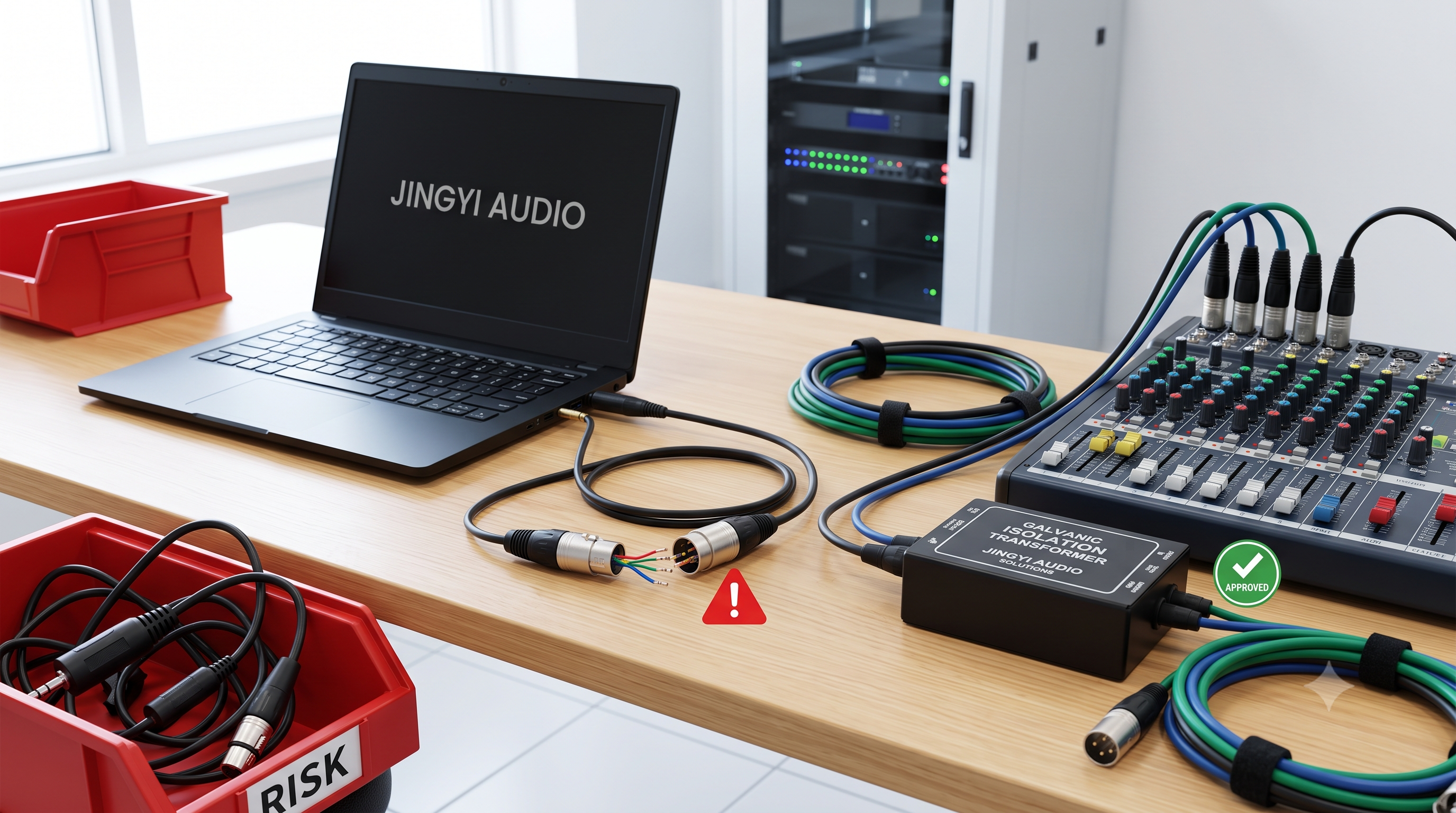
| Beeping during recording | EMI leakage and host power interruption | Galvanic isolation, internal shielding, cleaner regulation |
| USB 2.0 vs 3.0 “sound difference” | OS re-enumeration and software settings | Better driver strategy, user education |
| Extension quality loss | Wrong topology, long analog path | Extend digital first, keep analog short |
What OEMs and ODMs need to build better USB C audio products
Short answer: The brands that win will treat USB-C audio cables as integrated electronic systems, not low-cost wire assemblies. They need better mechanics, cleaner power handling, stronger compatibility testing, and clearer use-case education.
This is the part of the report with the most business value.
1. Move fully into the active cable model
The report says the best margins will go to manufacturers that integrate premium DAC and ADC silicon into the cable or connector housing, naming the kind of chip ecosystem that includes ESS, AKM, and Cirrus Logic.
That idea is simple but important:
The cable is no longer just an accessory. It is the interface.
2. Overbuild the mechanics
The report argues that many failures start with physical design, not protocol theory. It calls for:
-
stronger shielding
-
foil-plus-braid designs
-
rigid strain relief
-
stronger solder joints
-
housings that handle twisting and movement better than typical data cables
That is how brands cut return rates and avoid the “it pauses when I move it” complaint.
3. Fix recording-path noise at the design stage
Playback gets the marketing. Recording creates the angry emails.
The report pushes brands to take recording reliability seriously through:
-
galvanic isolation
-
internal Faraday-style shielding
-
better power regulation
-
stronger separation of power and signal paths
-
guidance about turning off USB selective suspend or similar power-saving features on host devices
That advice is very practical.
4. Use material science to separate premium from commodity
As cheaper adapters flood the market, the report says premium ODMs can separate themselves through:
-
Graphene Copper (G-UPOCC)
-
UP-OCC Pure Silver
-
Gold/Palladium plating
In the high-end audio space, those materials help create real product tiers and stronger price justification when paired with solid engineering and honest product claims.
5. Use regulation and certification as business tools
The report says the EU common charger shift guarantees long-term USB-C penetration and that manufacturers should scale compliant production quickly. It also points to partnership models like PureLink + AVer as examples of how certification and ecosystem reliability can help win enterprise and ProAV business.
6. Teach buyers what the product really does
This may be the most practical point in the whole report.
Brands need to explain:
-
why USB 2.0 is enough for pure audio
-
why recording is more fragile than playback
-
why host phones and computers change dongle behavior
-
why digital extension is usually better than long analog extension
-
why a pure-audio cable may not handle video or SSD use
That is not filler content. That is part of the product.
SEO and LLM improvements made in this revised version
You asked for stronger SEO and LLM retrieval without losing detail. This version was revised with that in mind.
What changed
Answer-first formatting
Each major section now starts with a short answer so Google, AI search tools, and voice systems can lift the main point quickly. Google says AI search features still rely on standard SEO best practices. (developers.google.com)
Better entity coverage
This version keeps the branded examples from the report in the visible text:
-
Sennheiser
-
Audio-Technica
-
Sony
-
Shure
-
UGREEN
-
Anker
-
CABLE-LINK
-
PureLink
-
AVer
-
BXB
-
Dell
-
Moon Audio
-
Wireworld
-
AudioQuest
-
FiiO
-
Toxic Cables
-
Bose
-
Fender
-
Roland
-
Questyle
-
Ampapa
-
HiBy
-
Topping
-
Quad Cortex
-
Samsung S22 Ultra
That improves semantic coverage and helps match how LLMs retrieve and connect product information.
Stronger E-E-A-T signals
This version keeps:
-
author name
-
author role
-
publication date
-
update date
-
reviewer note
-
official sources
-
clear domain expertise framing
Google recommends helpful, reliable content and uses signals related to E-E-A-T in ranking. (developers.google.com)
No table of contents
You asked to remove it, so it is gone. The article still stays scannable through short sections, direct answers, and subheadings.
FAQ: The five key questions from the report
1. What is the most effective engineering method to extend a USB-C audio connection without inducing signal degradation?
Short answer: Extend the digital side first and keep the analog side short.
Analog signals degrade faster over distance because of resistance, capacitance, and EMI pickup. Digital signals hold up better to environmental noise, though they have their own length limits. In most high-fidelity setups, the best method is to use a strong USB-C digital extension, place the DAC at the end of that path, and keep the headphone cable after the DAC as short as possible.
2. How does physical USB-C cable shielding and connector tolerance affect audio playback stability?
Short answer: Weak mechanics can break playback even when the cable looks premium.
USB-C connectors have a dense pin layout. If connector tolerance is loose, strain relief is weak, or internal anchoring is poor, even small cable movement can create micro-disconnects. The operating system may treat that as a hardware detach event and stop playback immediately. Better shielding, stronger strain relief, rigid connector housing, and better solder support all help.
3. What are the root causes of persistent beeping sounds or signal dropouts when using USB-C for mobile audio recording?
Short answer: EMI leakage and unstable power are the main culprits.
Recording chains using ADCs are more sensitive than playback chains. Interference can leak from power lines into the analog side before conversion. Poor internal isolation and aggressive host USB power-saving behavior can also break the connection after the first few clean seconds. That is why some users get clean startup audio followed by static or repeating beeps.
4. Does the specific USB port version on a host machine dynamically alter the sound quality of external DACs?
Short answer: Usually the operating system is changing the behavior, not the bandwidth itself.
When a DAC is moved from one port to another, the system may register it as a new hardware instance. That can change volume, sample rate, bit depth, spatial settings, or other hidden mixer values. So the user may hear a change in sound quality even though the actual digital bandwidth was already enough on both ports.
5. Can standard USB-C extenders degrade the performance of high-fidelity DAC dongles, and what is the optimal extension topology?
Short answer: Yes, and the best path is usually digital first, analog last.
A poor extender can reduce signal integrity, especially if it is under-shielded or too long for the use case. The better setup is usually to extend the digital USB-C path, place the DAC near the headphones or IEMs, and keep the final analog run short. That reduces analog loss and keeps the more fragile part of the chain small.
Final takeaway
A USB C cable for audio now sits in the middle of connector policy, digital audio design, materials engineering, user expectation, and OEM product planning.
That is the real picture.
This category has moved:
-
from passive analog transport to active digital interconnects
-
from simple accessories to system-level products
-
from generic listings to compatibility-led engineering
-
from connector shape marketing to shielding, geometry, and real field reliability
-
from plain SEO copy to structured, answer-first writing that both people and AI systems can understand clearly
For consumers, the right move is to match the cable to the real use case.
For audiophiles, the real priorities are shielding, DAC quality, power isolation, connector stability, and short analog runs.
For OEMs and ODMs, the lesson is simple: the companies that solve real reliability issues, not just cosmetic ones, will own the next stage of this market.
About the author
Lynn Zhang is the CEO at Jingyi Audio. She works with OEM and ODM teams on cable structure, signal integrity, shielding, connector reliability, customization programs, and commercial planning for modern USB-C audio products used in consumer, enterprise, and professional settings.
Source notes
Official sources
-
Google Search Central, AI features and your website. Google explains that AI search features use the same core SEO best practices and do not require special AI-only optimization. (developers.google.com)
-
Google Search Central, Creating helpful, reliable, people-first content. Google explains that ranking systems reward helpful, reliable content and use signals related to E-E-A-T. (developers.google.com)
-
Google Search Central, FAQ structured data. Google explains how FAQ markup should match the visible page content. (developers.google.com)
-
European Commission, EU common charger rules. The Commission confirms USB-C common charging requirements and implementation dates. (commission.europa.eu)
-
USB-IF materials on USB4 Version 2.0 and EU conformity. (usb.org) (usb.org)