




High-Fidelity Audio Cable Architecture in B2B Environments: Technical Analysis, Forum Debates, and Market Integration of Audio Art Cable
Author: Lynn Zhang, CEO at Jingyi Audio
Published: June 18, 2026
Reading Time: 18 minutes
Category: Custom AV Engineering / High-Fidelity Infrastructure / B2B Procurement
About the Author
Lynn Zhang is the Chief Executive Officer at Jingyi Audio, a premium commercial and residential AV design firm specializing in reference-grade acoustic integration. With over 15 years of experience in system design, electrical engineering, and luxury home cinema consulting, Lynn writes on physical materials science and subjective audio performance.
Editorial Note: Jingyi Audio maintains independent technical evaluations. The following technical report on Audio Art Cable provides engineering insights for system integrators, commercial AV designers, and B2B procurement managers.
I. Introduction: The High-Fidelity Cable Dilemma
The high-fidelity audio industry operates in a challenging space where objective laboratory measurements frequently clash with subjective acoustic evaluations. For system integrators, commercial AV designers, and B2B procurement managers, choosing high-performance cabling is a critical infrastructure decision. Far from being mere accessories, high-fidelity cables serve as the primary transmission lines of any reference-grade corporate boardroom, residential cinema, or mastering studio.
These cables keep high-end components running at their maximum theoretical performance by minimizing impedance mismatches, signal degradation, and environmental electromagnetic interference (EMI) or radio-frequency interference (RFI).
[Audio Source Component] ---> (Impedance Mismatches & RFI/EMI Vulnerabilities) ---> [Amplifier]
VS.
[Audio Source Component] === (Audio Art Cable Optimized RLC Pathway) ===> [Amplifier]
This report provides a clear technical analysis of Audio Art Cable. It examines the company's corporate structure, metallurgy, and distribution capabilities. It also looks at real-world experiences shared on Reddit and LinkedIn, and addresses the top five most active discussions influencing professional audio forums.
II. The Audio Art Cable Story: Artisan Craftsmanship Meets Direct-to-Market Value
Founder Philosophy and Custom Shop Operational Dynamics
Audio Art Cable was founded in March 2005 by Rob Fritz, an electronics industry veteran with over forty years of experience in high-end consumer retail and custom audio-video installations. Fritz built the company to address a persistent market inefficiency: the high markups associated with premium cabling. By utilizing a direct-to-market structure and keeping operational overhead low, the brand delivers high-performance custom cabling solutions that rival products costing several times their market price.
Operating out of a dedicated custom facility in San Diego, California, all assemblies are handcrafted to order by lead custom shop technician Phil Martinez. This localized custom model allows B2B clients, such as system integrators and commercial designers, to specify:
- Exact run lengths down to the foot
- Specialized double-bi-wire configurations
- Specific premium terminations tailored to specialized architectural requirements
The custom assembly process involves precise hand-soldering using high-performance Cardas Quad Eutectic silver solder or Mundorf Supreme Silver/Gold Solder. After assembly, all conductive surfaces are chemically treated with Kontak ECO3x contact cleaner to minimize contact resistance and prevent oxidative degradation.
Manufacturing Architecture and Supplier Partnerships
Audio Art Cable relies on structured engineering rather than proprietary metallurgy fabrication. During the initial design phases, Fritz collaborated with Darren Hovsepian of DH Labs to select high-purity conductor profiles, dielectric geometries, and architectural configurations.
A highly specialized international OEM supplier manufactures the raw bulk cabling. This supplier also produces cabling for several of the most recognized reference brands in high-end audio. This partnership ensures that the bulk wire is produced to exact tolerances under strict quality control standards. The bulk cable is then imported to the San Diego custom facility, where it undergoes termination, chemical treatment, and specialized deep-cryogenic conditioning.
III. Materials Science, Metallurgy, and Dielectrics
The acoustic signature and electrical stability of Audio Art Cable's portfolio are determined by three primary metallurgical configurations:
- Ultra-High Purity Oxygen-Free Copper (UHP OFC): Used in the entry-level Classic and Classic Plus lines, this material minimizes grain boundary resistance to provide a balanced, natural presentation with robust low-frequency current transmission.
- Silver-Plated Copper (SPC): Used in the IC-3 interconnect and SC-5 speaker cable architectures, SPC pairs the high-frequency conductivity of pure silver with the rich, natural warmth of an OFC core. This setup offers excellent transient response and high-frequency resolution without introducing the harshness often found in poorly implemented pure silver conductors.
- Ultra-High Purity OHNO Continuous Cast (OCC) Copper and Silver: Used exclusively in the Statement and Copper Cryo series, OCC technology employs a patented continuous casting process that virtually eliminates grain boundaries. This single-crystal structure allows electrons to flow entirely unimpeded across long physical distances, minimizing phase shift, capacitive losses, and signal distortion.
Stranded OFC Copper Conductor (Multiple Grain Boundaries):
[===|===|===|===|===|===] -> Electron Scattering
Single-Crystal OCC Copper Conductor (No Grain Boundaries):
[=======================] -> Smooth, Unimpeded Electron Flow
These conductors are insulated using an ultra-low-loss foamed Polyethylene (PE) dielectric. This material provides a highly stable physical matrix with an exceptionally low dielectric constant, minimizing energy absorption and release cycles that degrade signal timing.
Proprietary Deep Cryogenic and Acoustic Conditioning
To further optimize conductivity, Audio Art Cable subjects its high-end assemblies to a patented deep cryogenic treatment. The completed cables are slowly cooled to temperatures below under precise computer control, held at this thermal nadir to allow the atomic structure of the copper, silver, and solder joints to organize uniformly, and then slowly returned to ambient room temperature. This cooling process removes internal stresses, fills micro-cavities within the crystalline lattice, and reduces micro-diode effects across material interfaces.
Furthermore, the brand offers B2B clients an optional pre-conditioning service utilizing the audiodharma Cable Cooker. This high-voltage, high-current signal sweep accelerates the standard burn-in timeline, ensuring that cables perform at peak efficiency immediately upon installation in a client's system, avoiding the standard 150-to-170-hour manual burn-in period.
Authorized Dealership and Strategic Brand Distribution
In addition to manufacturing its proprietary cabling, Audio Art Cable serves as an authorized distributor for several high-end consumer and professional hardware brands. This positioning allows B2B integrators to source fully matched, synergistic component packages. Audio Art Cable's distribution partnerships include:
- NuPrime Audio: High-performance amplification and source gear, including the reference-grade AMG & Evolution series and the entry-level 9x series.
- Electrocompaniet: Classical Norway-built amplification and high-fidelity streaming systems, spanning both the reference-level Classic Line and the wireless-centric EC Living Line.
- Furutech: Ultra-performance AC power accessories, custom bulk cables, and specialized Nano Crystal² Formula (NCF) power distributors.
- Acoustic Energy & Triangle HiFi: High-end floorstanding and bookshelf loudspeakers, which makes cohesive system matching easier.
IV. Technical and Pricing Structure of the Audio Art Cable Portfolio
For B2B procurement, custom installations, and luxury AV projects, the following structured index details the mechanical specifications, material compositions, and retail pricing metrics of the primary configurations offered by Audio Art Cable:
|
Product Model & Category |
Primary Conductor Material & Wire Gauge |
Insulation & Shielding Architecture |
Premium Termination Options |
Retail Price Range (USD) & Reference Details |
|
AAC IC-3 Classic (Analog Interconnect) |
Silver-Plated Oxygen-Free Copper (SPC); Low capacitance design |
Foamed Polyethylene dielectric; 100% Aluminum-Mylar shielding |
Gold-Plated Brass RCA plugs; DH Labs Ultimate Gold XLR pins |
$120 - $480 (From 0.5m RCA to 9.0m XLR pair) |
|
AAC Copper Cryo OCC (Reference Interconnect) |
Ultra-High Purity OHNO Continuous Cast (OCC) Copper |
Ultra-low-loss foamed PE; 100% Dual Aluminum-Mylar shield |
Triple Gold-Plated Pure Copper Viborg XM/XF-202(G) XLR & VR-109(G) RCA |
$530 - $660 (For 1.0m to 2.0m single-ended/balanced pairs) |
|
AAC Statement e IC (Flagship Interconnect) |
Hybrid Single-Crystal OCC 7N Copper & Solid Core Silver |
High-density foamed Polyethylene; Deep Cryogenic treated |
German WBT-0152 NextGen Copper/Silver RCA; Furutech 600 Series XLR |
$850 - $1,170 (Based on WBT Copper vs. Silver NextGen connectors) |
|
AAC SC-5 Classic (Standard Speaker Cable) |
Multi-Strand Silver-Coated OFC; 14 AWG (168 strands) |
Foam Polyethylene dielectric; Internal vibration-absorbing filters |
Gold-Plated DH Labs B-1C Bananas; Silver-Plated Copper Spades |
$215 - $250 (Standard 10-foot stereo pair configurations) |
|
AAC Statement e SC (Reference Speaker Cable) |
7N UHP-OCC Single Crystal Copper Matrix & SPC |
StarQuad architecture; Triple PVC CL3 jacket; Vibration wrap |
Furutech FT-212(G) Locking Bananas; FT-211(G) Spades |
$1,640 (Standard 8-foot stereo pair; customizable configurations) |
|
AAC Copper Cryo Speaker (Performance Speaker) |
Ultra-High Pure Oxygen-Free Copper (UHP OFC); Bi-wireable |
Foamed Polyethylene; Vibration absorbing internal fill |
Gold-Plated Pure OFC Viborg VB-401(G) Bananas or VS-702(G) Spades |
$600 (Standard 8-foot stereo run; custom runs available) |
|
AAC D-1SE2 (Coaxial Digital) |
Solid OFC Silver-Plated center conductor; 75 Ohm |
Closed-cell foam FEP; Dual-copper braided silver-plated OFC shield |
Eichmann Tech RCA connectors; Furutech FP-3-117(R) BNC |
$300 - $350 (Standard 1.0-meter terminated digital assembly) |
|
AAC Statement BNC (Reference Digital) |
Single-Crystal OCC Solid Silver center conductor |
High-grade closed-cell FEP foam; Silver-plated OFC braid shield |
Oyaide SLSC Silver/Rhodium BNC connectors with solid-silver pins |
$500 (Standard reference-grade BNC 1.0m digital line) |
|
AAC Power1 Classic (High-Current AC) |
Ultra-Pure Copper Conductors; Heavy-Duty 11 AWG |
Robust PVC exterior jacket with dense double-shielding matrix |
Gold-Plated Furutech FI-15(G) or FI-11(G) US Male and IEC ends |
$220 - $345 (From standard 1.0m to 1.5m industrial lengths) |
|
AAC Statement e2Plus (Reference AC Power) |
Pure Cryo-Treated Single Crystal OCC Copper; 10 AWG |
Advanced multi-layer vibration-damping geometry |
Furutech FI-50M Nano Crystal Formula (NCF) Rhodium Plugs |
$1,680 - $1,960 (Premium power cords utilizing $770 connector sets) |
V. Real-World Case Studies and Platform Experiences
Analyzing user feedback from platforms like Reddit, LinkedIn, and Audiogon reveals clear operational trends and systemic performance characteristics for Audio Art Cable:
LinkedIn Verified Professional Endorsements
High-end commercial consultants and verified corporate buyers frequently use LinkedIn to share performance benchmarks of Audio Art products in critical listening environments:
- Dan S. (Acoustical Systems Consultant): Published a detailed analysis of the architectural integration of custom power setups, noting that the inclusion of the AAC Classic series power cords significantly reduced systemic system hum in a crowded commercial power grid.
- Jay S. (Corporate Media Buyer): Detailed a complete office network infrastructure upgrade using the Copper Cryo OCC analog lines, writing that the cables resolved high-frequency interference in a multi-display environment and provided clear highs without high-frequency irritation and full-bodied mid-to-bass transitions.
- Mark S. (Commercial Spaces Architect): Documented a commercial office lounge install utilizing the SC-5 Classic Speaker Cables, stating the connected speakers sounded highly spacious and detailed, with a tight, deep bass response that exceeded performance expectations for a compact layout.
Reddit Community Implementations
Within community boards such as r/audiophile, r/BudgetAudiophile, and r/gamingheadsets, several real-world installations highlight the brand's practical advantages:
- The Custom Long-Run Installation (r/audiophile - Uptown_Sucker): Detailed a residential integration requiring a custom 20-foot run of speaker wire. Rather than forcing the client to purchase extremely expensive, pre-terminated lengths from mass-market brands, Rob Fritz fabricated a custom 20-foot run of Audio Art Cryo Copper cables. The installer documented this solution as a high-value option that achieved superior synergy with the client's equipment.
- The Magnepan Synergy Paradigm (r/audiophile): On a dedicated "Synergy and Before/After" thread, an installer described integrating Magneplanar Maggie .7 flat-panel speakers. Magneplanar speakers have a reputation for presenting a highly revealing, sometimes bright top-end if paired with standard silver-plated copper cabling. While the installer noted that the AAC SC-5 (silver-plated) was highly extended, swapping it with a heavier gauge pure copper cable like the Kimber 8TC resolved the bright issue in that specific configuration. However, the reverse was true in another setup, where the Kimber sounded dull and the Audio Art cable performed beautifully, showing the critical importance of matching cables to system components.
- High-Value Commercial Headset Bundles (r/gamingheadsets): A professional system integrator reviewed the Meze Audio 99 Classics and Neo headphone bundles supplied directly by Audio Art Cable. The standard consumer configuration (purchasing the headphones and boom mic separately) routinely costs over $350. Audio Art Cable supplied the entire B2B bundle for $195. The integrator highlighted that the Meze headphone series is fully serviceable, utilizing screws rather than glue, which ensures long-term durability in high-use commercial environments.
- Artisan Alternatives to Mass Brands (r/turntables): On a thread regarding premium RCA cables, a commercial installer recommended Audio Art Cable over mass-market competitors. The installer emphasized that Rob Fritz and his team hand-build these cables in San Diego without the heavy markup associated with large-brand marketing, delivering a noticeable performance improvement over standard budget interconnects.
VI. Deconstructive Analysis of Key Forum Debates
The high-fidelity audio cabling segment is characterized by continuous technical and philosophical debates. In professional communities such as Reddit and Quora, discussions often highlight distinct points of friction between academic electrical engineers and high-end system designers.
Question 1: Objective Measurements vs. Subjective Acoustics in Premium Cabling
Does objective laboratory testing (e.g., Audio Science Review) showing zero acoustic difference between cheap and ultra-expensive cables mean premium cables have no place in a professional integration?
Short Answer: Standard laboratory tests use static signals that do not reflect the dynamic complexity of music, whereas real-world cables act as reactive RLC networks interacting with variable amplifier and speaker loads.
Detailed Technical Analysis: This debate highlights a fundamental division in the audio industry. Objectivists rely on static measurements using high-performance analyzers (such as the Audio Precision APx555) to evaluate metrics like Total Harmonic Distortion (THD), frequency response, and basic loop resistance. These tests are conducted under steady-state conditions, often using simple sine waves, and frequently show no measurable difference in the analog waveform between a budget cable and an expensive reference line.
However, standard B2B design engineering acknowledges that steady-state signals do not represent the dynamic complexity of music. In real-world installations, cables operate as complex passive RLC networks possessing specific:
- Series resistance ()
- Loop inductance ()
- Parallel capacitance ()
These parameters can interact dynamically with the output impedance of the amplifier and the reactive, frequency-variable impedance load of the loudspeaker.
For example, a high-capacitance speaker cable paired with a high-bandwidth, solid-state amplifier can cause high-frequency phase shift, leading to subtle amplifier oscillation or high-frequency roll-off. Furthermore, robust double-shielding and advanced conductor geometries prevent electromagnetic interference (EMI) and radio frequency interference (RFI) from infiltrating the signal path. While standard AP tests in shielded labs may show identical measurements, the practical difference in a noisy corporate or urban environment is often a lower noise floor and improved system resolution.
Therefore, custom integrators should view premium cables not as "sound enhancers," but as critical system infrastructure designed to protect signal integrity and prevent impedance-induced distortions.
Question 2: Electromagnetic Shielding and Deep Cryogenic Treatments in High-Fidelity Signal Integrity
What are the specific physical and metallurgical mechanisms of shielding and deep cryogenic treatment that impact the signal pathway, or are these purely marketing tools?
Short Answer: Shielding acts as a physical Faraday cage to block external electrical noise, while deep cryogenic treatment realigns the metal's crystalline structure to lower electrical resistance and phase shift.
Detailed Technical Analysis: Shielding and cryogenic treatments are often dismissed as "marketing science" by casual consumers, but they are based on established metallurgical and electromagnetic principles:
Unaligned Molecular Structure (Pre-Cryo):
[ o - o - o ] --> Higher resistance, electron scattering
[ - o - o - ]
Aligned Uniform Crystalline Lattice (Post-Cryo):
[ o - o - o ] --> Smooth, unimpeded electron flow with
[ o - o - o ] minimized micro-diode distortion
In low-level analog lines, such as microphone lines or phono runs, the signal voltage can be exceptionally small. Nearby AC power cables, Wi-Fi routers, switching power supplies, and digital displays emit high-frequency electromagnetic fields. 100% coverage aluminum-Mylar shielding and tinned copper braids form a Faraday cage around the signal conductor, redirecting external electrostatic and electromagnetic fields directly to the system ground. Without adequate shielding, these high-frequency currents mix with the analog signal, causing intermodulation distortion (IMD) in the amplification stages.
Deep cryogenic treatment addresses the micro-structural characteristics of metal wire. During the drawing and extrusion of copper or silver wire, structural defects, micro-cavities, and grain boundaries are introduced into the metallic lattice. When a cable undergoes deep cryogenic cooling down to temperatures below , the severe reduction in thermal kinetic energy allows the metallic atoms to contract and realign into a more uniform, compact crystalline structure.
Once returned to room temperature, this optimized molecular alignment remains stable. This structural uniformity reduces electron scattering and minimizes micro-diode distortions across grain boundaries. Consequently, it lowers the wire's bulk resistance and optimizes signal velocity, resulting in quieter backgrounds and more accurate phase alignment.
Question 3: Technical Advantages and System Trade-offs of Balanced XLR vs. Unbalanced RCA
In high-end architectural integrations and phono systems, when does a balanced XLR interconnect provide a distinct technical advantage over an unbalanced RCA line?
Short Answer: Balanced XLR provides a distinct advantage over long runs or in high-noise areas because its three-conductor design uses Common Mode Rejection (CMR) to cancel out interference, whereas unbalanced RCA is prone to ground loops.
Detailed Technical Analysis: Determining whether to deploy balanced XLR or unbalanced RCA connections is a fundamental question for architectural integrations. The technical choice relies on distance, environmental electrical noise, and the circuit topology of the connected equipment.
An unbalanced RCA cable uses a single core conductor to carry the positive signal and a surrounding shield or return wire for both the signal return and ground reference. This layout makes the ground shield an active participant in the signal pathway. If a potential difference exists between the grounds of two connected components (due to different AC wall outlets), a ground loop current flows through the shield, resulting in audible 60Hz hum and system noise. Furthermore, because RCA lines lack a differential signal path, any EMI/RFI that penetrates the shield is amplified directly along with the audio signal.
In contrast, a balanced XLR cable contains three distinct conductors: a positive signal line (hot), an inverted-phase negative signal line (cold), and an independent ground shield. The ground shield serves solely as an electrostatic barrier and does not carry any signal. At the receiving component, a balanced differential receiver amplifier measures only the difference between the hot and cold lines:
Because any electrical noise or interference picked up along the cable run affects both conductors equally (in-phase), the differential receiver cancels it out. This process, known as Common Mode Rejection (CMR), allows balanced XLR connections to remain quiet over runs of several hundred feet in high-EMI commercial spaces.
Balanced XLR Path (Common Mode Rejection):
Hot Line : [ Signal (+) ] + [ Noise ] ---\
-----> Differential Amp [(+) - (-)] = 2 * Signal (Noise Canceled)
Cold Line : [ Signal (-) ] + [ Noise ] ---/
Unbalanced RCA Path (No Rejection):
Signal Line: [ Signal (+) ] + [ Noise ] ---------> Amplified Direct (Noise & Hum Retained)
Ground Line: [ Shield/Ground Return ]
However, balanced connections are not always necessary. For short runs under three feet between components plugged into a single dedicated power conditioner, a high-quality, heavily shielded RCA cable can deliver outstanding performance. Additionally, true balanced operation requires fully differential circuitry inside both the source and receiving components. Using simple XLR-to-RCA adapters or connecting to pseudo-balanced inputs does not provide common-mode noise cancellation, as the circuit lacks a true differential receiver.
Question 4: Digital Connectivity Standards: I2S vs. Asynchronous USB in High-Performance DAC Implementations
Is the increasingly popular I2S digital interface technically superior to standard asynchronous USB, or does it introduce integration liabilities for B2B system configurations?
Short Answer: Asynchronous USB is highly reliable for standard installations because the DAC clock controls the data flow, reducing jitter, while I2S is physically fragile, lacks industry standardization, and is highly sensitive to cable length.
Detailed Technical Analysis: The debate regarding digital input protocols focuses heavily on timing jitter and electrical isolation.
|
Structural and Functional Parameter |
Asynchronous USB Interface Protocol |
I2S (Inter-IC Sound) Interface Protocol |
|
Primary Structural Purpose |
Robust, high-speed inter-device data bus. |
Internal, short-range inter-IC board communication. |
|
Clock and Timing Management |
Host-independent; managed by the DAC's internal clock. |
Clock and data lines are transmitted over separate conductors. |
|
Physical Cable Standard |
Standardized, robust USB-A/B/C connections. |
Non-standardized; typically uses HDMI or RJ45 lines. |
|
Max Recommended Length |
Up to 5.0 meters (under the USB 2.0 specification). |
Extremely short runs (typically under 0.5 meters). |
|
Jitter Vulnerability |
Low; buffered and reclocked at the receiver chip. |
High; highly vulnerable to cable impedance and length. |
|
Standardization Status |
Universally standardized and hot-pluggable. |
No industry standard pinout; high risk of pin mismatch. |
I2S (Inter-IC Sound) was designed by Philips in the 1980s for direct, short-range chip-to-chip communication within a single physical chassis. It separates the digital audio data stream from the master, bit, and word clocks. When transmitted over an external cable (typically terminated via HDMI or RJ45 connectors), I2S avoids the phase-locked loop (PLL) extraction process required by S/PDIF or AES/EBU.
However, because I2S lacks balanced low-voltage differential signaling standards for long distances, it is highly sensitive to cable quality, length, and parasitic capacitance. Even short cables over 0.5 meters can introduce reflection, attenuation, and high jitter. Furthermore, I2S has no universally accepted pinout standard. Connecting a streamer to a DAC using mismatched I2S pin configurations can result in channel swapping, static, or damage to the receiver chips.
Asynchronous USB, standardized under USB-IF, handles inter-device digital transfer much more reliably. In this mode, the DAC controls the timing. Digital audio data is sent in packets to the DAC's buffer, and the DAC's ultra-low-noise internal clock pulls this data from the buffer at a precise frequency. This asynchronous buffering makes jitter introduced by the USB cable or host computer largely irrelevant.
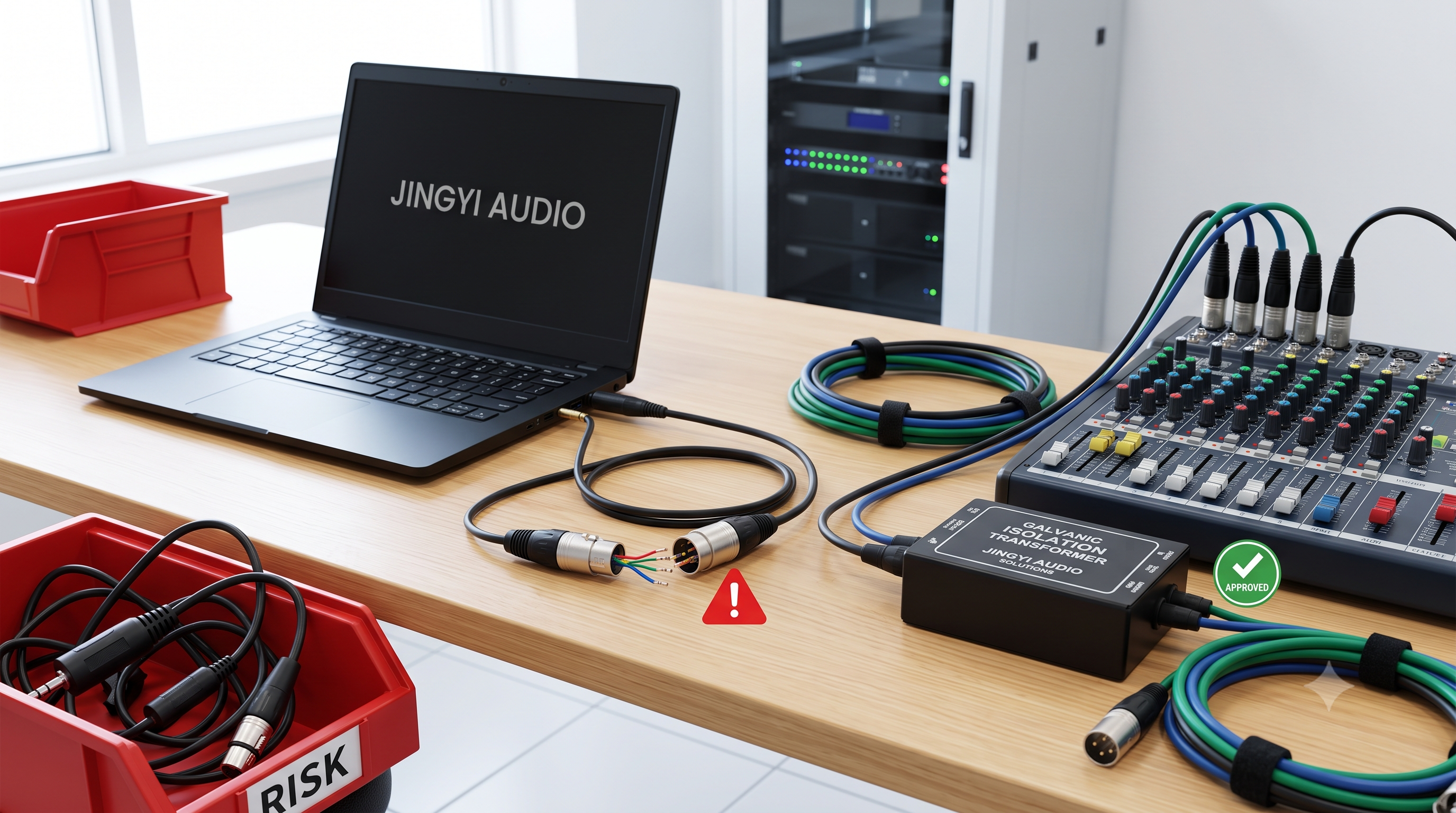
The primary vulnerability of USB is the transmission of high-frequency electrical noise from the host computer's power supply and processors over the USB power and ground lines. For professional integrations, standard asynchronous USB paired with galvanic isolation provides a highly stable, plug-and-play solution. I2S should only be deployed when short, impedance-matched cables are used between components with verified pinout compatibility.
Question 5: System Synergy and the "Loom Effect" in High-End Architectural Installs
What is the physical reality of the "Loom Effect," and does implementing a unified single-brand cable setup provide a measurable operational advantage?
Short Answer: The Loom Effect refers to the electrical consistency gained from using the same cable materials and construction throughout an audio system, which creates predictable impedance matching and uniform dielectric performance.
Detailed Technical Analysis: The "Loom Effect" describes the systemic acoustic and electrical changes that occur when an entire audio chain is wired with cables from the same manufacturer and series, rather than a mix of different brands. While some audiophiles discuss this in highly subjective terms, the foundational mechanism is rooted in electrical consistency and predictable impedance matching.
Every cable introduces a small reactive load (inductance and capacitance) into the system. If an integrator mixes different cables—for example, pairing a high-capacitance interconnect with a low-capacitance, highly inductive speaker cable—each stage of the audio system will exhibit different phase angles and energy storage characteristics. This can lead to unpredictable frequency response changes and variable noise-rejection performance.
Mixed-Cable System:
[Source] --(High Capacitance Line)--> [Pre-Amp] --(High Inductance Line)--> [Amp] --(Variable Load)--> [Speaker]
Result: Unpredictable phase shift, mismatched noise rejection, variable dielectric absorption.
Unified "Loom" System:
[Source] --(Matched Series Cable)---> [Pre-Amp] --(Matched Series Cable)---> [Amp] --(Matched Series)--> [Speaker]
Result: Predictable impedance matching, uniform dielectric absorption, cohesive system noise floor.
By deploying a unified cable loom, the system gains electrical consistency:
- Uniform Dielectric Absorption: Using the same dielectric material (such as foamed Polyethylene) ensures consistent dielectric absorption and release characteristics across the entire signal path.
- Consistent Ground Impedance: Unified construction maintains matching ground-plane impedance across all analog runs, reducing the potential for ground loops.
- Synergistic System Balance: Many high-performance cables are engineered to balance specific electrical behaviors. For instance, if an amplifier has a slightly bright or revealing top-end, a unified loom of high-purity OCC copper can help deliver a natural, organic presentation across the entire system.
For custom installers, utilizing a single, unified cable line ensures predictable system performance and simplifies troubleshooting during commissioning.
VII. B2B Procurement and Contact Architecture
For system integrators, commercial installers, and B2B procurement managers looking to negotiate custom orders, bulk pricing, or dealer accounts, Audio Art Cable maintains direct communication lines with its administrative and technical team:
|
Administrative & Technical Channels |
Dedicated Contact & Routing Protocols |
|
Direct Founder & CEO |
Rob Fritz (Lead Design Consultation & Custom B2B Account Management) |
|
Primary Corporate Email |
rob@audioartcable.com or robfritz@cox.net |
|
Administrative Direct Line |
+1 619-255-6451 (San Diego Custom Facility) |
|
Voice & Text Mobile Line |
+1 619-417-3035 (Direct Installer Routing & Design Queries) |
|
B2B Custom Assembly Lead |
Phil Martinez (Lead Assembler, Custom Termination Specialist) |
|
Physical Operations Facility |
San Diego, CA 92115, USA |
VIII. Best Practices for B2B System Design and Procurement
The integration of high-performance cabling is a critical factor in ensuring system reliability and maximizing the performance of high-end audio installations. Based on technical analysis, platform case studies, and forum discussions, the following guidelines are recommended for B2B system design and procurement:
- Specify High-Purity Conductor Structures for Low-Level Analogue Lines: For phono cartridges, sensitive analog preamplifiers, or run distances exceeding 3 meters, specify single-crystal OCC copper interconnects. The grain-free molecular matrix of OCC minimizes phase shift and signal loss compared to standard stranded alternatives.
- Implement Unified Single-Brand Cable Looms for Predictable Performance: To ensure consistent dielectric performance, matched grounding impedance, and cohesive system balance, deploy a unified cable loom within premium installations. This provides predictable system performance and simplifies troubleshooting during commissioning.
- Utilize Pre-Conditioned Assemblies to Minimize Installation Lead Time: Request pre-conditioning via the audiodharma Cable Cooker for all custom installations. This accelerates the standard burn-in process, ensuring that the system delivers its full performance capability immediately upon completion, saving valuable on-site testing hours.
- Select Standardized Digital Interfaces for Long-Distance Runs: For digital paths up to 5 meters, use high-quality, shielded asynchronous USB connections. Only specify I2S connections for short runs (under 0.5 meters) where pinout compatibility between components is verified and documented.